
History
Multistoried. And that’s before you even look up.
.jpg "A clock mounted on a red doo")
Throughout a nearly seven-decade stretch, our buildings, formerly known by many different names and life cycles, originated from a rather interesting story...
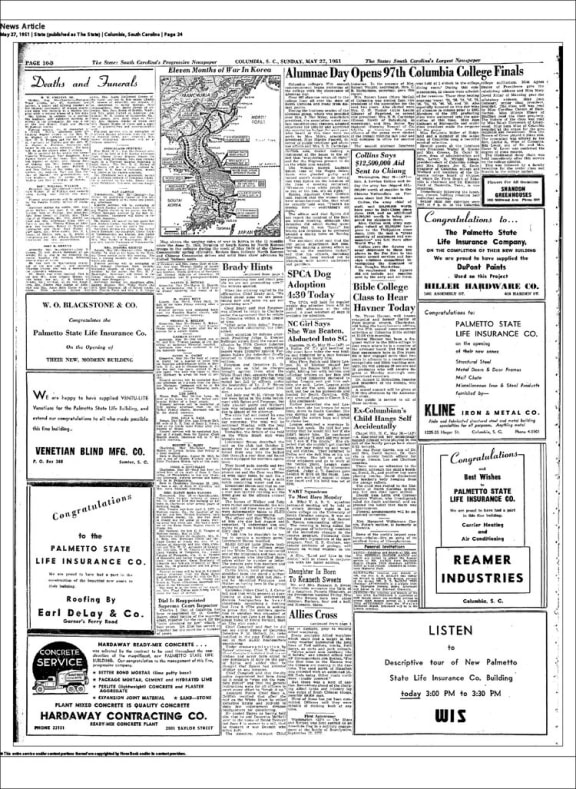
It’s oldest portion, found on the southeast corner of Lady and Sumter streets, was first known as the Masonic Temple Building in 1921 to 1922. The Masons, widely known as a fraternal organization, has its roots in antiquity and is directly descended from the association of "operative masons," the cathedral builders of the Middle Ages, who traveled through Europe employing the skills of their craft. The organization, as we know it today, began in 1717 in England where the cathedral building was on the decline and the "operative masons," or "free masons" as they were known, started to accept members who were not members of the mason's craft, calling them "speculative masons" or "accepted masons."
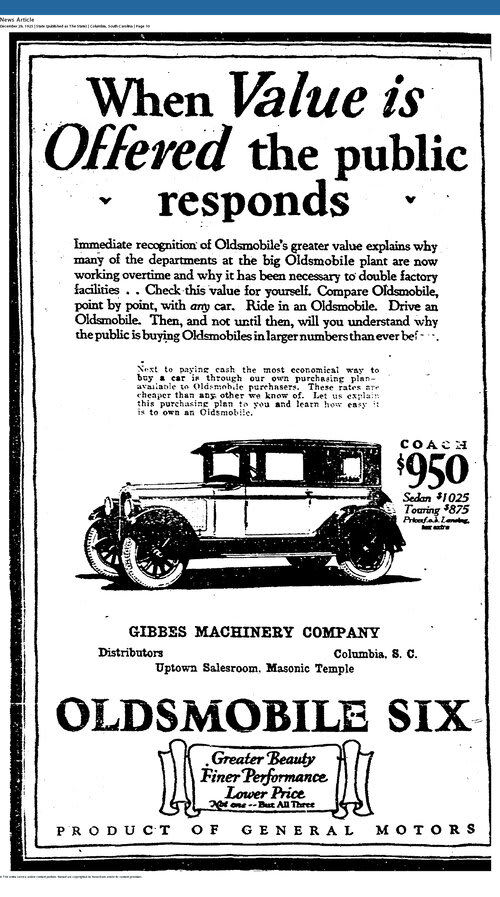
As time began to pass, the building's life cycles began to evolve as it was then a headquarters for the Red Cross, an automobile showroom, law offices, the home of Palmetto State Life Insurance Company, a brokerage firm, bank offices, and more.
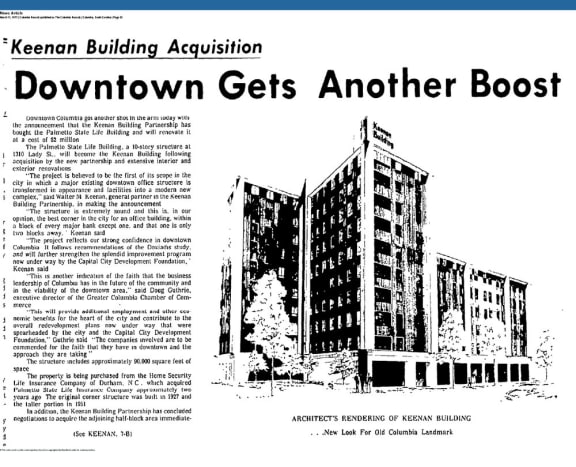
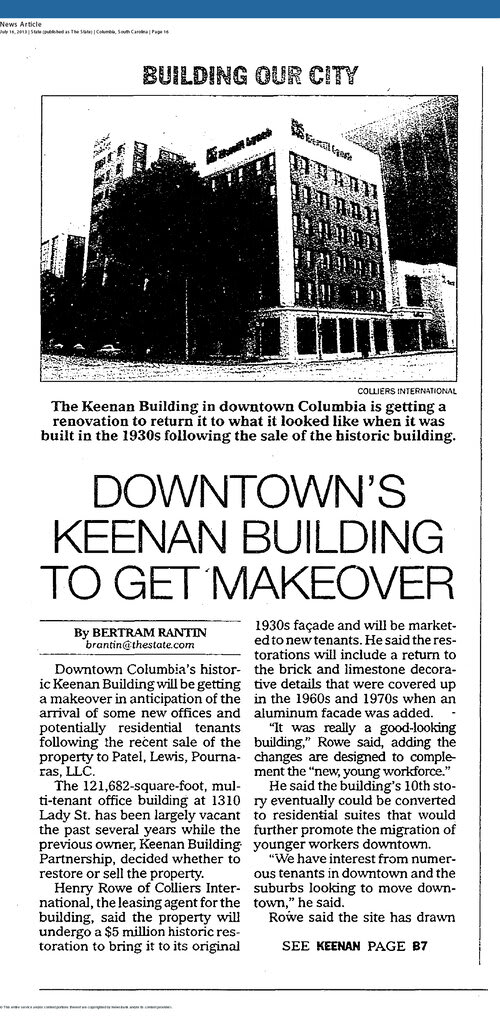
Additions to the building occurred in 1982, including the 3-story wing facing Sumter street formerly home to Merrill Lynch. In 1985, yet another addition was built. A modern annex (made of a glass facade) was added to include a six-floor wing, extended and reaching the marion street intersection. The building, at this point prior to our acquisition, entirely consisted of commercial office space for Columbia businesses.
Our Design Past:
To pay homage to its past, each building built in said decade is presently married together by our interiors finishings and designs. A celebration of the past while embracing its collective differences.
1920’s Masonic Temple Influence
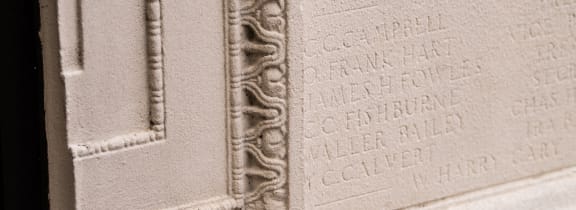
Described by early news coverage as “one of the finest of its kind in this part of the country” to “a dream of architectural beauty.” Plans called for differing heights, including 12 floors, before it was finalized at six, with space for a roof garden crowning the structure. Primary exterior materials were red brick, finished Indiana limestone and ornamental terra cotta. It all begins with an idea. Maybe you want to launch a business. Maybe you want to turn a hobby into something more. Or maybe you have a creative project to share with the world. Whatever it is, the way you tell your story online can make all the difference.
Architect: H.W. Whitcover of Savannah, Ga.
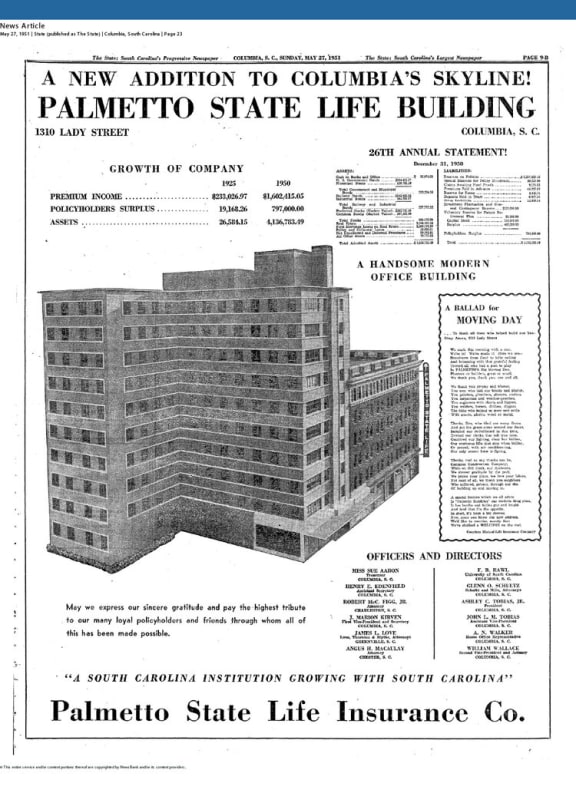
1950’s Turn of the century modernism
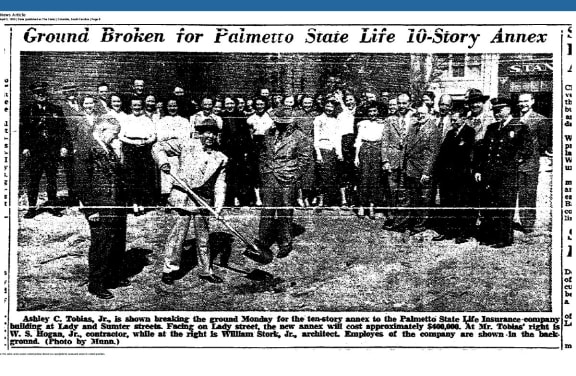
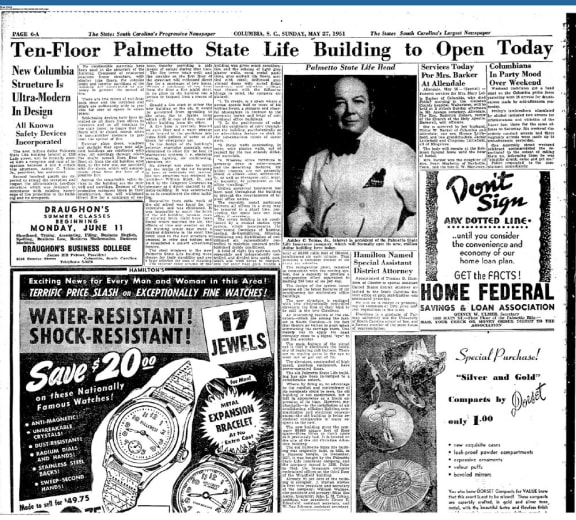
A L-shaped Mid Century Modern annex was added in 1950 by the Palmetto State Life Insurance Company. The company received a news story by The State on May 27, 1951, the date of the annex’s opening reception, detailing the annex’s interior configuration. The story also described Palmetto State Life’s decision to make no attempt for the annex to match the original structure, but to instead leave its exterior intact as a contrast to the new wing – “the old building is not modernized, but is instead left in its appearance as a frank expression of its time.”
Architect: William Stork Jr.
1980’s A look into the future
The three-floor wing, former home to Merrill Lynch, erected the last addition in 1982 of which consist of a primarily glass facade office building.
Architect: Wibler Smith & Associates
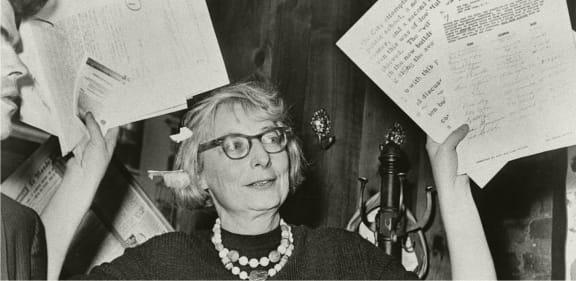
Jane Jacobs’s work & theory, specifically her book,
The Death and Life of Great American Cities
Throughout the redevelopment of this property, we referenced and reviewed Jane Jacobs’s theories of what makes cities work, and how our building could take a meaningful approach in its role in the evolution of our Great American City. We hope that the redevelopment of this small corner helps achieve some of these tenets, and admire Ms. Jacobs for her gifted and thought-provoking principals. You will find references to her work and theory throughout our site. Those citations and further reading can be found here.
As buildings remain, they will have become something more than mere decay from the past or evidence of previous failure. They will have become the shelter which is necessary and valuable to the district. The economic value of new buildings is replaceable in cities. But the economic value of old buildings is irreplaceable at will. It is created by time. This economic requisite for diversity is a requisite that vital city neighborhoods can only inherit, and then sustain over the years.
|
The sight of people attracts other people. People’s love of watching activity and other people is constantly evident in cities everywhere. |
A city sidewalk by itself is nothing. It is an abstraction. It means something only in conjunction with the buildings and other uses that border it. |
|
Casual public sidewalk life, most of it fortuitous - a feeling for the public identity of people, a web of public respect and trust, ties directly into other types of public life. |
Privacy is precious. In small settlements everyone knows your affairs. In the city everyone does not – only those you choose to tell. |
|
A good city street neighborhood achieves a marvel of balance between the two. |
Cities need old buildings so badly it is probably impossible for vigorous streets and districts to grow without them. |